Wanted: Chivalrous Heroes Who Know Right From Wrong
It is no secret that many authors in the general market have taken a shine to writing heroes who are morally gray and make questionable life choices. It seems that for a book to sell, a man has to be dark, brooding, have murky morals, and generally resemble a growling beast more than a gentleman. And let’s face it, this trend has been around for decades, as seen in works by Byron and the Brontes. This begs the question: what happened to chivalrous heroes who would stand up for what was right?
I recently read a great Substack article by Elena B. Sato titled “Let the boys be good.” She makes a great case for having male characters who are both human and flawed but also good, including examples from a few films. I highly recommend you go and read her article.
Before I stumbled on Sato’s post, I’d been thinking about what kind of heroes, exactly, we need more of. As a storyteller, I’m always thinking of what kinds of stories I want to be known for. And the answer that popped into my head was heroes who know what goodness is and heroines who embrace their personalities without losing their femininity in order to be considered worthy of a plot.
Today, I’ll be focusing on heroes. What makes heroes truly chivalrous, strong, and worth imitating? In order to answer this question I will share examples of three real men. (Heads up, these are all men from the Bible because what better inspiration is there?)
Exhibit A: Joseph
At the start of the story, Joseph was an arrogant young man. He was his father’s favorite and he knew it. He was also gifted and knew how to interpret dreams. But due to resentment, his older brothers sold him into slavery and he ended up in Egypt. Things began to look up when one of the highest ranking officials in Egypt, Potiphar, made Joseph the head of his household. But then Potiphar’s creepy wife tried to seduce Joseph, which landed him in prison. It wasn’t until many years later, when Joseph interpreted a dream that had been tormenting Pharaoh, that he was able to leave prison and become the second most powerful man in all of Egypt.
There’s a lot we could say about Joseph, but here are the things I want to highlight. First, Joseph had weaknesses, yet they were never glorified. He had an issue with arrogance, but after being sold, that was swiftly dealt with. (Being a servant will do that to you.) Joseph also had strong convictions. Despite his circumstances, he knew he’d been raised to honor God and others, and this was the compass that led him to stand firm when Potiphar’s wife tempted him. Finally, we see that Joseph was distinctly led by faithfulness. While in Potiphar’s house, his master’s affairs prospered. While in prison, Joseph rose to the position of warden because he took what had been given to him and made it better.
By the end of the story, Joseph’s brothers come around, and instead of having them executed for all the wrong they’d done to him, Joseph tests them and forgives them. This only highlights how far he’d come.
Joseph was a man whose fortitude didn’t lie in his physical might, but his moral, mental, and spiritual strength. Not all heroes need to be warriors in order to be impressive.
Exhibit B: Jonathan
Jonathan is one of those quiet side characters that steals the spotlight for being so memorable. In a way, he reminds me of Samwise Gamgee from Lord of the Rings. Jonathan was the rightful heir to the throne of Israel, but along came this kid who’d been anointed by God to replace him. What does Jonathan do? He fully trusts God’s choice and embraces David as a brother.
Jonathan’s character is impressive. He was ridiculously brave, as seen that one time he decided to take on a Philistine garrison with nothing but wild trust in God and his armor bearer. He was a compassionate and smart military leader, as seen by the occasion when Saul commanded the army to fast, and Jonathan was angered by his father’s decision. Later on, the men spoke up in defense of Jonathan, who hadn’t heard the edict from his father to fast that day. The men spared Jonathan’s life because they knew he was someone worth following.
And yet, even though he was the crown prince and a leader people would die for, Jonathan did not hesitate to hand his birthright to David. He gave David his robe and his sword, and later helped David escape from Saul’s wrath.
Jonathan was unselfish, courageous, and loyal to a fault (both to God and David). He was fierce as a warrior but completely devoted and tender as a friend. Sometimes, the best heroes aren’t the main characters but the ones who make it their life’s quest to see to the betterment of others.
Exhibit C: David
Of course, this article wouldn’t be complete if we didn’t speak about David. David is probably one of the most popular bible heroes who went from unknown and unwanted shepherd boy to God’s anointed. He became a popular warrior and one of the greatest kings Israel has seen.
And yet, David was a very flawed man. He was a warrior who shed the blood of countless people; he committed murder, adultery, and his sin brought about the death of many in his kingdom, not to mention that his track record as a father is dismal. But despite all this, the thing that makes David stand out is that every time he would come back to God.
David knew how to repent. He knew how to own his mistakes and move forward. He was one of the best and strongest warriors, but he knew how to humble himself and be tender towards God. He was a loyal friend to Jonathan and a man of his word.
Curiously, we can learn as much from David’s strengths as from his weaknesses. He wasn’t a great husband. He was a very bad father. His strength of character seemed weaker at the end of his life than at the beginning. David was a flawed hero in all of his human glory. And yet, God chose him, loved him and promised that the Messiah would be his descendant. The best heroes aren’t perfect; rather, they know how to return to God and own up to their mistakes.
Let the Heroes Be Heroic
The word hero originates from the Greek concept of someone with divine ancestry (such as a demigod) who did extraordinary things. Some even trace this word to mean protector or watcher. As writers, we need to write about heroes who are actually heroic. As people, we need to look up to heroes who do extraordinary things in order to protect and watch over those under their care.
As Christians, we need to realize that we are sons and daughters of the living God, and we have a responsibility to point people towards His goodness and light. And no, before you call me out for heresy, I am not saying we are demigods. But we are children of the most high God, and this entails responsibility to depict heroism according to God’s heart.
So let’s create and advocate for characters our sons can one day look up to and our daughters can admire. Let us present evil as evil, and stop glorifying sin as heroic. Let us teach young women that respect and honor are more romantic than abuse. Let us teach young men that weakness isn’t what defines them, but rather it is what they do with it that can turn them into men like Joseph, Jonathan and David.
To echo Sato’s article, “let the boys be good”.
Thanks for reading!
Anna
Mentioned article:
Elena B. Sato’s post: “Let the boys be good.”
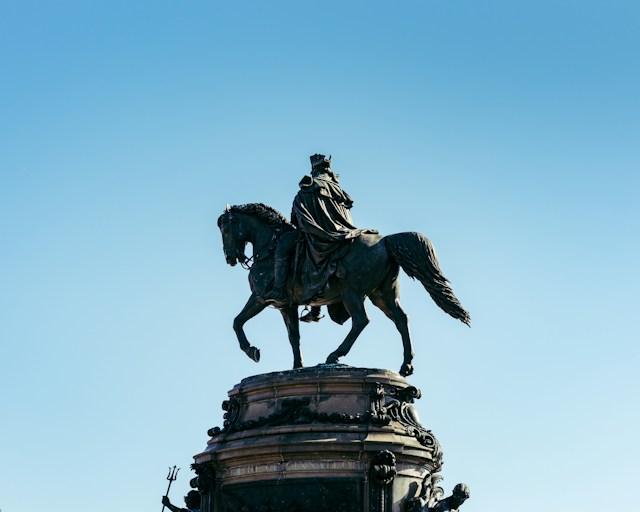
Photo by Luisa Frassier on Unsplash

Anna Raquel Lont
Hello! I'm Anna, an avid consumer of books and tea and a passionate lover of Jesus. I'm passionate about words and storytelling. I love teaching and I enjoy embroidery and baking.

You May Also Like

Character Arcs and What They Teach Us About Spiritual Growth

Why We Need More Cinderellas in a World of Mulans