What if God Called You to Deep Soil Work?
I’ve been actively serving in my local church for more than twelve years. As a twenty-three-year-old, that means that I’ve been serving for half of my life. I’ve tried multiple things out, and I’ve learned some places I excel in (such as leading small groups and Bible studies) and others I’m very bad at (such as taking care of one-year-olds in the nursery). I’ve gotten to experience the great joys of serving others, such as seeing their faces light up when something finally “clicks”, or the joy that comes when they encounter God, or experience His presence during worship for the first time, or finally find a place to belong.
I’ve also gotten to experience the less-than-glamorous side of ministry. Filling in for someone who doesn’t show up time after time. Being the first one to arrive and the last one to leave on a Sunday, doing work that feels insignificant. Or pouring into someone’s life and giving my best only to have them reject the effort and refuse to be discipled. Ministry has it all. And yet, Jesus is never surprised by any of it.
The Parable of the Sower
Recently, as God has challenged me to serve with an open heart, I’ve been drawn back to Jesus’s words in the parable of the sower. It turns out that He perfectly described what ministry life would be like for us years later.
Matthew 13:1-23 tells the story of a farmer who goes out to scatter seed. Some falls alongside the path, some on rocky soil, some among thorns, and some on good soil. Only the seed that falls on good soil gives fruit, while the rest are eaten by birds, scorched by the sun, or choked by the weeds.
I have always seen this parable as a lesson on “some people will get it, some won’t”. But it goes deeper than this. As I re-read it some months back, I realized that it doesn’t just speak about ways people respond to the Gospel, but ways people respond to our own labor of spreading the seed. The parable of the sower is a picture of ministry life. Let’s take a closer look.
The Seed and the Farmer
It is important to realize that the seed is the Word of God. First and foremost, God is the one who sends forth His Word. He is the primary farmer and the one who does most of the work. But as volunteers and ministers who serve, we have joined in the sowing of the seed, and our task now is to spread the Word of God in whatever way He assigns to us.
It is essential to remember that while we can give much of ourselves to work and serve God, ultimately He is the one who brings about the growth. We may do our part, but the one who will bring about a true response, a lasting change, and lasting fruit, is God Himself. Paul put it beautifully:
“I planted, Apollos watered, but God gave the increase. So then neither he who plants is anything, nor he who waters, but God who gives the increase.” – 1 Corinthians 3:6-7 (NKJV)
Our job is to collaborate with others to spread the seed. At the end of the day the real work is up to God. This strips us of performance, comparison, and pride. As someone in ministry, I have had to learn that all I can do is my best, and the rest is up to God. This is both a challenging and liberating thought.
The Sower Didn’t Change His Aim
Another striking thing about this parable is that the sower didn’t change his way of spreading the seed simply because it landed on different kinds of soil. This is an important thing for us as volunteers and ministers to realize. No matter its reception, we’ve been called to spread the seed as generously and with as much excellence as we can.
Personally, I’ve been tempted to change the excellence of my service to God simply because of the different ways my work is received. But the sower didn’t change the beat of his drum; rather, he kept working with gusto. What a challenge! In whatever soil God calls us to serve, we must do so with faithfulness and excellence.
The Seed On the Road
The first seed Jesus spoke about landed on the road. This ground had been walked upon time and time again until it had hardened. The moment the seed landed on it, it had no depth and was immediately swept up by the birds.
Jesus explained this as people who heard the message but didn’t understand it. Then, the enemy came and took away the seed since it hadn’t even entered the soil of their hearts.
This explains a lot for those of us scattering seeds! Many people will hear the message, the sermon, the prayer, the testimony, the counsel, and yet not understand. It’s not necessarily because we are doing a horrible job or something is wrong with us. It can simply mean that some people are in a place where they are incapable of getting it. And the enemy works actively here. He takes the opportunity for the loose seed and does his best to immediately snatch it away.
So, no, it’s not always about you and whether you’re doing a horrible job. Sometimes, even when we give our best, some people are not in a place of understanding. Will they always be there? No. I believe God has grace for everyone and some people can start in this place and suddenly have their understanding opened by the Spirit. But this is a great reminder to not take ourselves so seriously all the time.
The Seed On the Rocky Soil
The next soil Jesus spoke about was the rocky soil. This soil wasn’t full of rocks externally, rather, it was shallow soil where right underneath the surface rocks abounded. On the surface, it seemed the seed went in. But later, when roots failed to grow, the truth was revealed.
Jesus explained this as people who received the seed eagerly and immediately, seeming to respond well to it, only to fall apart at the first sign of persecution or trouble.
I have met many people like this throughout my life. They are the first ones to get involved and respond. They can be the loudest in worship and show up faithfully, only to have completely disappeared a few weeks later. What happened? They were eager, but they didn’t have roots deep enough to sustain them through the trials of real life with Jesus.
This reminds me that it isn’t up to us to control someone’s commitment to church or God. It also isn’t up to us to sustain the strength of people’s spiritual lives. We can teach, disciple, pray, and support people. But the deep work, the real work, is between them and God.
The Seed with the Thorns
Let’s talk about the thorns next. This seed fell into soil which seemed good, but was also riddled with something else: thorns. The seed grew, but so did the thorns.
Jesus explains this as people who hear the message but soon are choked by the worries or anxieties of the world and the deceitfulness of riches. He describes this as a slow strangulation of the plant. It isn’t immediate death or a sudden falling away from the message; rather, it is a slow burying under competing loyalties.
How many times have we seen people fall under apathy in church? It isn’t obvious at first. They will still go to church, serve, and do all the outward things that look like growth. But then, a closer look reveals that the faith which was once so promising is being drowned under the competing allure of the world.
We can sow faithfully into people, and they can grow, but if they refuse to care for the garden of their hearts and pull out the weeds in their lives, then they can get choked down and stunt their own growth. Does this mean we should slack off on the excellence of our work? No. God has called us to be faithful to Him, and this includes our service to others.
The Seed with Different, Fruitful Results
The final soil was the best. It was healthy and the seeds that landed there grew up to bear fruit. And yet, they bore different amounts of fruit depending on each seed’s capacity. This is also an important reminder to those of us working to disciple people. Not everyone will grow the same! Some people will bear more fruit than others.
What a reminder this is to leave behind comparison! Each one of us will bear different amounts of fruit, and in the kingdom this is completely normal. This isn’t a reason for comparison amongst believers nor a reason for disappointment to those of us serving. God grows each of us individually and carefully.
A Call to Faithfulness and the Deep Work
As you can see, our job is to scatter seeds, water them, and remain faithful. We must be generous and dedicated in each and every type of soil and give the best we can out of love for God, the master farmer. We can rest in the fact that we don’t have to produce fruit in others. We simply serve with open hearts, and God does the rest.
I want to finish off by encouraging you with one more thing. The good seed which produced fruit was the seed that fell the deepest. Many times, the fruit of our labor will not be fast, immediate, or visible. But God has called us to do a deep-soil work. A work that isn’t loud, but lasting. So don’t be discouraged. Keep discipling, keep praying, keep sowing into people’s lives with generosity of heart and spirit, even in the dark. We may sow without acknowledgment; someone else may water what we lovingly planted, but God will be the one who brings about the fruit. He sees us, and He grows us.
Thanks for reading!
Anna
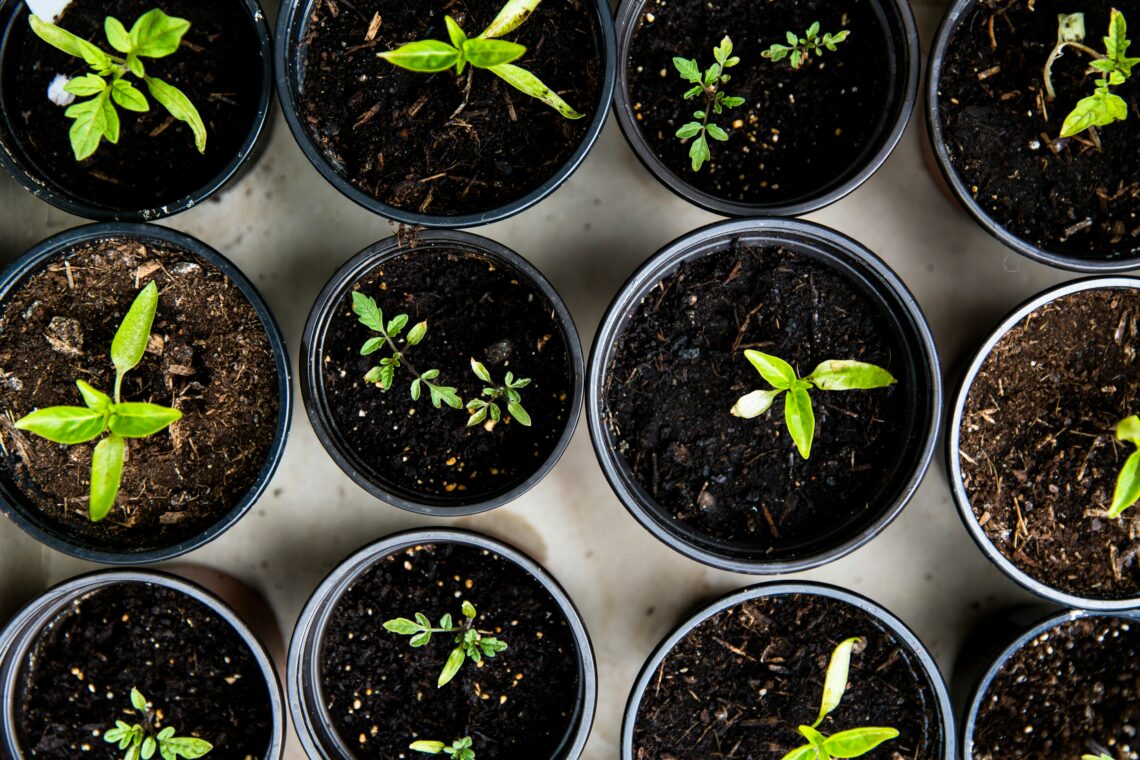
Photo by Markus Spiske on Unsplash

Anna Raquel Lont
Hello! I'm Anna, an avid consumer of books and tea and a passionate lover of Jesus. I'm passionate about words and storytelling. I love teaching and I enjoy embroidery and baking.


You May Also Like
The Turning of the Soil: When God Disrupts to Prepare
A Tale of Two Plows